
You built your deck to be a place your family enjoys. However, if your deck is more than ten years old and hasn’t been inspected recently, what feels solid underfoot may not be.
According to the North American Deck and Railing Association, over 60 million decks exist in North America, with an estimated 30 million now past their useful life and in need of repair or replacement. That means roughly half of all decks in use today may pose hidden issues and safety risks to the families.
The question is, how can you tell?
In this post, we’ll cover:
- Visual warning signs and structural red flags every homeowner should know
- Connection point, foundation, and railing safety concerns
- The difference between cosmetic issues and safety-critical problems
- When to call a professional for a comprehensive deck safety inspection
Visual Warning Signs Every Homeowner Should Know
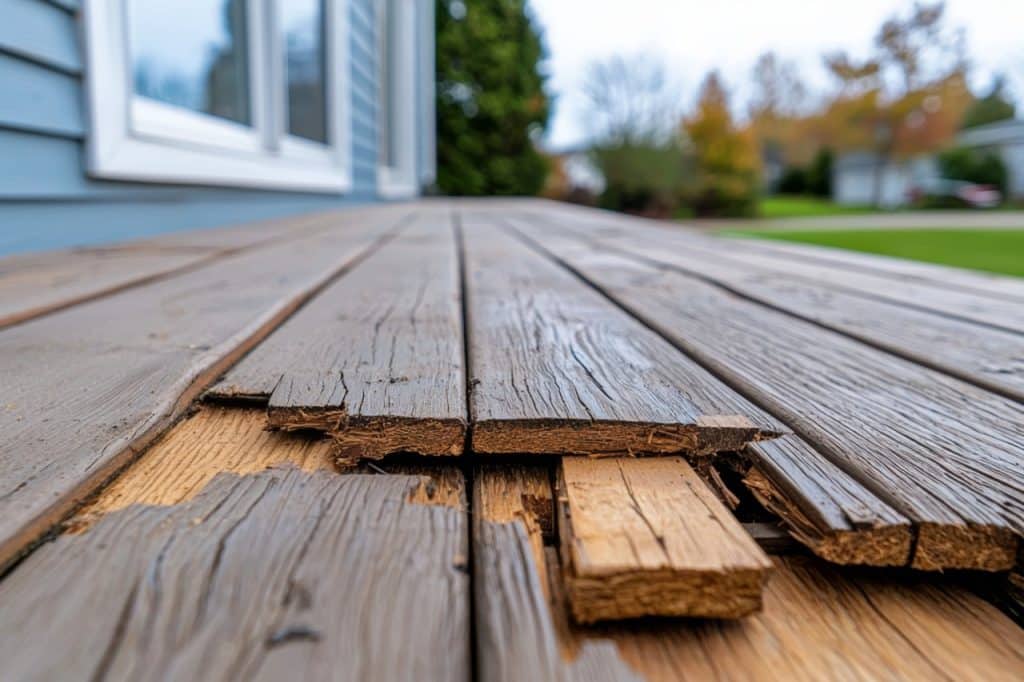
A deck inspection starts with what you see. Many of the most serious structural problems begin as surface-level symptoms that homeowners notice long before a professional inspector ever does.
- Wood rot: Soft, spongy, or discolored wood decking is one of the most common warning signs. Press a screwdriver into suspect areas — if it sinks easily, rot has compromised the deck’s structural integrity.
- Cracking and splintering: Visible cracks in deck boards are normal as wood ages, but deep or widespread cracking indicates deterioration beyond cosmetic concerns.
- Discoloration: Dark staining or uneven coloring across deck boards signals moisture damage, mold growth, or prolonged water pooling beneath the surface.
- Mold and mildew growth: Where mildew growth is visible, moisture has penetrated the wood, accelerating decay and weakening the deck framing over time.
Regular inspections give property owners the opportunity to catch these warning signs early, before surface problems become structural failures.
Structural Red Flags That Demand Immediate Attention
Structural red flags are warning signs that indicate that your deck’s ability to safely support weight may already be compromised.
- Wobbly railings: Loose railings are among the most common causes of dangerous collapses and deck-related injuries. Any movement when you push firmly against a railing requires immediate attention.
- Loose or bouncing deck boards: Deck boards that shift or flex underfoot signal weakened structural components or failing fasteners beneath the surface.
- Sagging deck surface: A deck surface that visibly dips or sags indicates failing support posts or deteriorating footings below.
- Separation from the house: A visible gap between your deck and the house is a serious warning sign that the ledger board connection may be failing.
If you notice any of these structural red flags, stay off the deck and contact a professional inspector for a deck inspection before allowing family members or guests back onto the surface.
Connection Points, Fasteners, and Hardware

The visible surface of a deck tells part of the story. Corroded, loose, or improperly installed hardware is a leading cause of deck structural failures that homeowners often overlook entirely.
Corroded Fasteners and Loose Hardware
Inspect nails, screws, lag screws, and metal connectors throughout the deck framing. Rust, corrosion, and loose fasteners compromise the connections that hold deck boards, joists, and railings securely fastened in place. Any fastener showing significant corrosion warrants replacement.
The Ledger Board
The ledger board anchors the entire deck structure to your home and is the most critical connection point on any deck. Check for gaps between the ledger and the house, signs of wood rot, missing lag screws, and compromised flashing that allows water to penetrate behind the board.
Foundation and Support Issues
Problems at ground level are just as dangerous as issues on the deck surface.
Shifting Posts and Cracked Footings
Deck support posts should stand plumb and connect securely to footings with post anchors. Leaning posts, cracked concrete footings, or loose connections between posts and their anchors all indicate foundation problems that affect the structural integrity of the entire deck.
Soil Erosion Around Supports
Soil erosion around footings exposes and destabilizes the foundation that supports your deck’s posts. If footings are visibly heaving, sinking, or surrounded by washed-out soil, the deck’s ability to safely carry a load is compromised.
Railing and Stair Safety
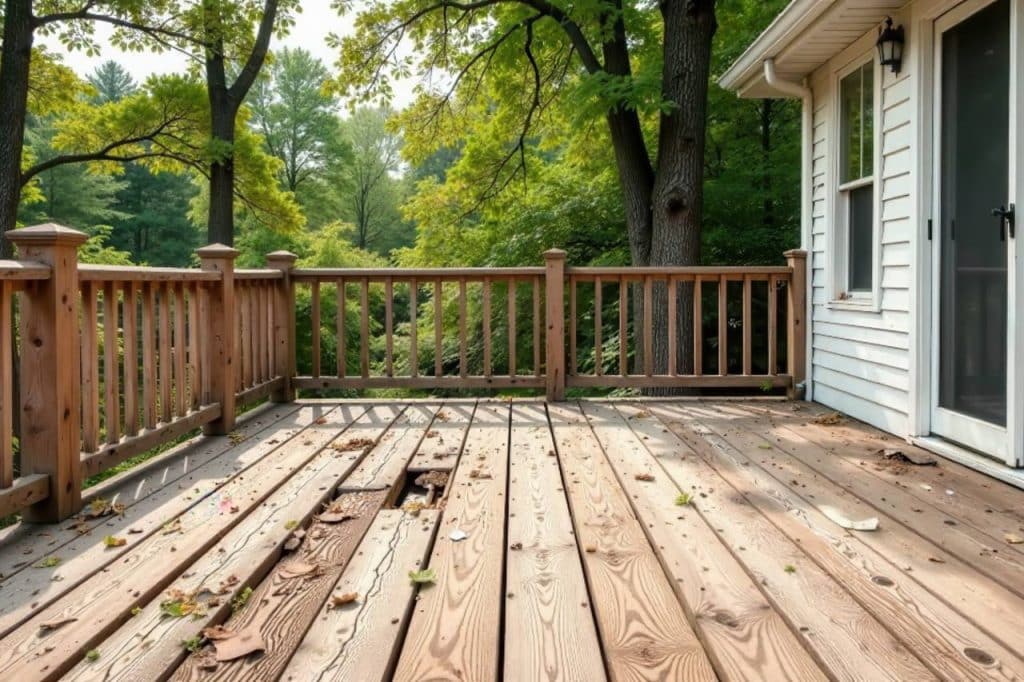
Railings and stairs are the most frequently used parts of any deck, and among the most common sources of deck-related injuries. A deck inspection should give these areas close attention to prevent falls and address loose railings before they become safety hazards.
Unstable Handrails and Loose Balusters
Push firmly against your deck railings from multiple directions. Any movement indicates a connection problem that poses a serious fall risk. Loose balusters should be checked for spacing, as current building codes require gaps of less than four inches to prevent accidents involving children.
Deteriorating Stair Treads
Deck stairs take more foot traffic and weather exposure than any other part of the structure. Check stair treads for soft spots, visible cracks, and loose screws. Handrails on stairs should be securely attached and graspable along the full length of the stairway.
Age-Related Considerations
According to InterNACHI, only 40% of existing decks in North America are completely safe. Age is one of the primary reasons, and a deck that looks fine on the surface may be hiding years of accumulated wear. May is Deck Safety Month, a good reminder that regular deck inspections should occur.
Typical Deck Lifespan
Most pressure-treated wood decks last between 10 and 15 years with consistent maintenance. Cedar and redwood decks average 15 to 20 years. Even a well-maintained deck eventually reaches a point where regular deck inspections become more critical and repairs more frequent.
Warning Signs in Older Decks
Decks built before 2009 may not meet current building codes, particularly around ledger board attachment, railing height, and baluster spacing. Older deck construction often used nails rather than lag screws to secure the ledger board, a practice now known to significantly increase the risk of collapse.
Cosmetic Issues vs. Safety-Critical Problems
Not every deck problem requires immediate action, but knowing the difference between a cosmetic issue and a safety-critical one is essential for every property owner.
| Issue | Type | Action Required |
| Surface fading or graying | Cosmetic | Clean and reseal when convenient |
| Minor surface scratches | Cosmetic | Sand and refinish at the next maintenance |
| Mold or mildew on the deck surface | Cosmetic/Monitor | Clean promptly, monitor for deeper rot |
| Cracked or splintered deck boards | Moderate | Replace the affected boards soon |
| Wood rot in deck boards | Safety-Critical | Replace immediately |
| Wood rot in deck framing or posts | Safety-Critical | Professional inspection required |
| Loose or corroded fasteners | Safety-Critical | Replace immediately |
| Wobbly railings or loose balusters | Safety-Critical | Do not use the deck until it is repaired |
| Ledger board separation or rot | Safety-Critical | Stay off the deck, call a professional now |
| Cracked or shifting concrete footings | Safety-Critical | Professional inspection required |
When in doubt, treat the issue as safety-critical. A professional deck inspection removes the guesswork entirely.
Seasonal Deck Inspection Checklist

In addition to regular care, Property owners should inspect their deck at least once a year, ideally in spring, before heavy outdoor use begins. Use this deck inspection guide to review the key areas every homeowner should check each season to catch problems early.
- Check deck boards for soft spots, cracks, splintering, and loose fasteners across the entire deck surface.
- Inspect for wood rot by pressing a screwdriver into areas around fasteners, posts, and anywhere moisture collects. Watch for insect infestation in soft or damaged wood.
- Examine the ledger board for gaps, rot, missing lag screws, and compromised flashing at the deck-house interface.
- Test all railings by pushing firmly in multiple directions. Any movement requires immediate attention.
- Check balusters for looseness and verify spacing meets current building codes and local requirements.
- Inspect stair treads and handrails for stability, soft spots, and secure attachment.
- Examine support posts and footings for leaning, cracking, and soil erosion around the base.
- Check for debris buildup and water pooling on the deck boards and underneath, where moisture accelerates wood decking deterioration.
Repair vs. Replacement and the Risks of Waiting
Delaying necessary repairs always makes the situation worse.
Repair vs. Replacement Decision Factors
Surface-level issues like cracked deck boards, loose fasteners, and minor wood rot in isolated areas are typically good candidates for repair. When rot has spread to the deck framing, support posts, or ledger board, full replacement is usually the safer long-term decision, avoiding costly repairs down the road.
Risks of Delaying Necessary Repairs
Ignoring deck repair signs rarely saves money. A loose fastener becomes a failed connection. Minor wood rot spreads into structural components. What could have been a straightforward fix becomes expensive emergency repairs, and liability for preventing injuries on an unsafe deck falls on the property owner.
When to Call a Professional and What They Look For

Regular deck inspections are a valuable first line of defense, but some conditions require the trained eye of a professional deck contractor. Call a professional when your deck is 10 or more years old, when you notice any structural red flags, or when the deck has not been inspected in the past 2 to 3 years.
Professional deck contractors inspect your deck by examining what homeowners typically cannot see. Their evaluation of your living space covers:
- Ledger board attachment, flashing condition, and connection hardware throughout the deck framing
- Support post plumb, post anchor condition, and footing integrity below grade
- Deck board fasteners, joist hangers, and metal connectors for corrosion and failure
- Railing and stair compliance with current building codes and safety standards
Concerned About Your Deck’s Safety? Get Expert Peace of Mind Today
Your deck should be a place where your family makes memories, not a source of worry. The warning signs covered in this post are easy to overlook, but the consequences of missing them are not. A proactive deck safety inspection is always less costly than the alternative.
At Simpson Decks and Construction, we provide professional deck inspections and expert repairs to homeowners across the Tri-Cities area. Our experienced team knows exactly what to look for and how to protect your outdoor living space and create a safe environment for your family for years to come.
Don’t wait for small deck repair signs to become serious safety hazards. Contact Simpson Decks and Construction for a professional deck safety inspection and discover exactly what your deck needs to keep your family safe and your outdoor space beautiful for years to come.