

You step outside on a Saturday morning, coffee in hand, and something sounds different. A board groans underfoot. Another one shifts just slightly when you put your weight on it. It was not doing that last summer.
The first instinct is to wonder how serious it is. Is this a $20 fix or a sign of something deeper? The honest answer is: it depends on what your deck is actually telling you. This guide walks through how to read those signals, what you can address yourself, and when it is time to bring in a professional.
In this post, you will learn what causes a squeaking or shifting deck, how to locate the source of the problem, which fixes are appropriate for a homeowner to tackle, and which red flags mean you should stop and call someone.
Why Decks Squeak and Shift
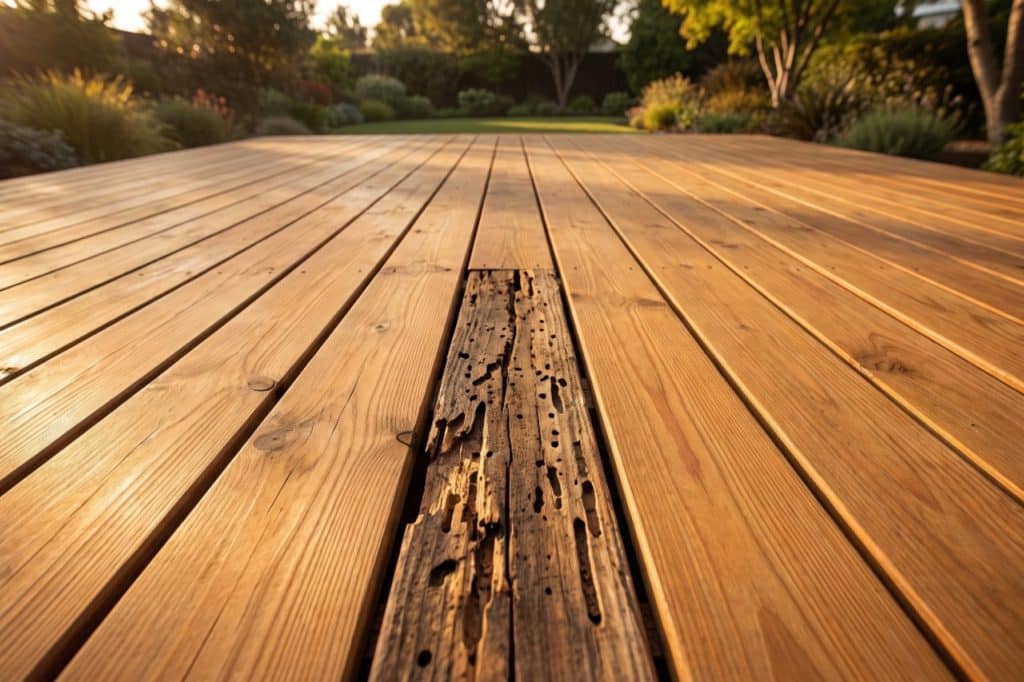
A squeaking or shifting deck is almost always a movement problem. Something that should be held firmly in place is moving when you step on it, and that movement creates friction, sound, and flex.
Three things cause most of it.
Nails are the most common culprit. A nail has a smooth shaft with no threads, so when the wood around it moves, the nail has nothing to hold onto. It backs out slowly over seasons of use. Even galvanized nails lose their grip over time, and once they do, every step on that board produces a little rub between the wood and the fastener.
Joists are the horizontal framing members that run beneath your deck boards, supporting them from below. When joists are spaced too far apart or are undersized for the span, a board between two of them flexes when you step on it. That flex causes the board to rub against the fastener, which is where the squeak comes from.
Trapped moisture is the third cause. When water gets between a deck board and the joist below it, it softens the wood around the fastener. A softened fastener hole gives the nail or screw room to wiggle, and a wiggling fastener is a noisy one.
The Tri-Cities climate accelerates all three. Kennewick temperatures typically range from 27°F in winter to 93°F in summer. That roughly 66-degree swing means your deck wood is expanding in July and contracting in January, every single year. That cycle is not a flaw in the deck. It is what wood does. But it does mean that fasteners loosen faster here than they would in a more stable climate, and a deck that was quiet at five years old may start talking at eight or ten.
One important distinction: a single board that creaks in one spot is a different situation from a deck that shifts noticeably when you walk across it. The first is usually a surface fix. The second warrants a closer look.
How to Find the Source
Start by walking the deck slowly and deliberately. Note every spot where a board feels loose, spongy, or produces a sound. Mark those sections with chalk or painter’s tape so you can come back to them.
Once you have mapped the problem areas, tap the boards near their fasteners. A hollow sound when you tap means the fastener has backed out and is no longer seated firmly in the wood. A solid sound means the connection is still tight.
Press a screwdriver firmly into any wood that looks soft, discolored, or darker than the surrounding boards. If the screwdriver sinks in easily, rot has compromised the structural integrity of that section. At that point, the fix is no longer a surface repair. You are dealing with wood that has lost its ability to hold a fastener at all.
What You Can Fix Yourself
Surface-level fixes are well within reach for most homeowners. Here is where to start.
Go over every visible fastener with a drill. Tighten any loose screws. If you find nails, consider replacing them with deck screws. Screws have threads that grip the wood and resist backing out over time in a way that smooth-shafted nails simply cannot. This is a performance difference, not a code requirement for deck boards, but it is a meaningful one.
If a board still moves after tightening, the issue is likely that it does not have enough fasteners. One screw per joist is sometimes not enough, particularly on wider boards. Try adding a second screw at each joist crossing. Two points of contact hold a board far more firmly than one.
For boards that creak even after tightening, a wooden shim with construction adhesive can help. Slide the shim into the gap between the deck board and the joist below it. The shim fills the space that was allowing movement, and the adhesive locks it in place.
These fixes address what is happening at the surface. They do not address what is happening in the framing below. If the same board starts squeaking again within a single season after you have fixed it, the problem is in the structure underneath, not in the fastener you replaced.
When to Stop and Call a Professional
Some patterns are not surface problems, and treating them as surface problems makes them worse.
If every board over a single joist is squeaking, the joist itself may be cracked, undersized, or beginning to fail. Tightening the deck boards above it will not fix a compromised joist.
If a squeak spot shifts location on the same board over a few weeks, the joist beneath it is moving. That is a structural issue.
If the entire deck structure moves when you walk on it, that is not a squeaking or shifting deck problem. That is a foundation or framing problem, and it requires a professional evaluation before anyone uses the deck again.
The same applies to wobbly railings, a visibly sagging deck surface, or any separation between the deck and the house. The ledger board is the framing member that connects your deck directly to your home’s structure, and every edition of the International Residential Code since 2000 has required that decks be positively anchored to the structure to resist both vertical and lateral loads. If you can see a gap forming between the deck and the house, stay off the deck and contact a professional before allowing family or guests back on it.
As a general rule: if your deck is 10 or more years old, if any of the structural red flags above are present, or if the deck has not had a professional inspection in the past 2 to 3 years, it is worth having someone take a look at the full picture, not just the boards on top.
The Longer Conversation About Materials
Wood decks require this kind of ongoing attention because wood is a living material. It responds to moisture and temperature. That is not a criticism of wood; it is just the reality of what you are working with. The expand-contract cycle that loosens fasteners and causes squeaks is built into the material itself.
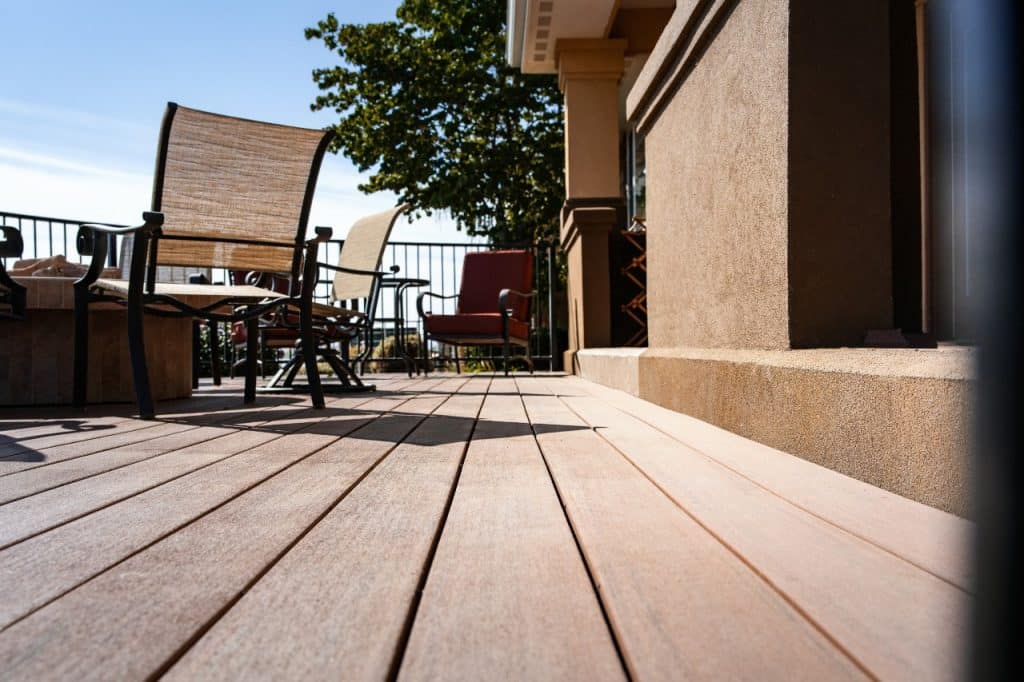
PVC decking, like the TimberTech products we install, does not have the same relationship with moisture. It does not absorb water the way wood does, which means the cycle that slowly works fasteners loose is largely removed from the equation. Boards stay where they are put. The annual spring inspection that turns into a repair project is not part of the routine.
PVC costs more upfront than wood. That is a straight answer, and it is worth knowing before you start a project. The trade-off is that the maintenance cycle that brings homeowners back to this problem every spring does not follow them into a PVC deck. For a lot of Tri-Cities homeowners, that is worth the difference.
Your Deck Is Worth Listening To
A squeak or a shift is your deck asking for attention. Some of what it is saying is easy to address this weekend with a drill and a box of screws. Some of it is worth having a professional evaluate before the problem gets larger or more costly.
If you are not sure which category you are in, that is exactly what we are here for. Contact Simpson Decks and Construction to schedule an on-site consultation or get an on-the-spot quote. We will take a look at what is actually going on and give you a straight answer on what it needs.