
When it comes to deck installation, homeowners have several materials to choose from, each with its own pros and cons. Some of today’s most popular choices are Trex (composite) decking and traditional wood decking. Both options have their advantages, but ultimately, the right material for you depends on your priorities – like appearance, budget, long-term durability, and maintenance requirements.
In this blog, we’ll break down the differences between Trex vs. wood decking to help you make a more informed decision. Additionally, while composite and wood are great choices, there’s a third material that might be the perfect solution: PVC decking. PVC is projected to be one of the most popular decking options, with Market Research Future predicting a market value of $2.3 billion by 2028 (up from $1.5 billion in 2023).
Given these numbers, we’ll explore why PVC is becoming a preferred choice for homeowners in the Tri-Cities area, especially when they are looking for a premium, low-maintenance decking material.
Trex Decking Overview
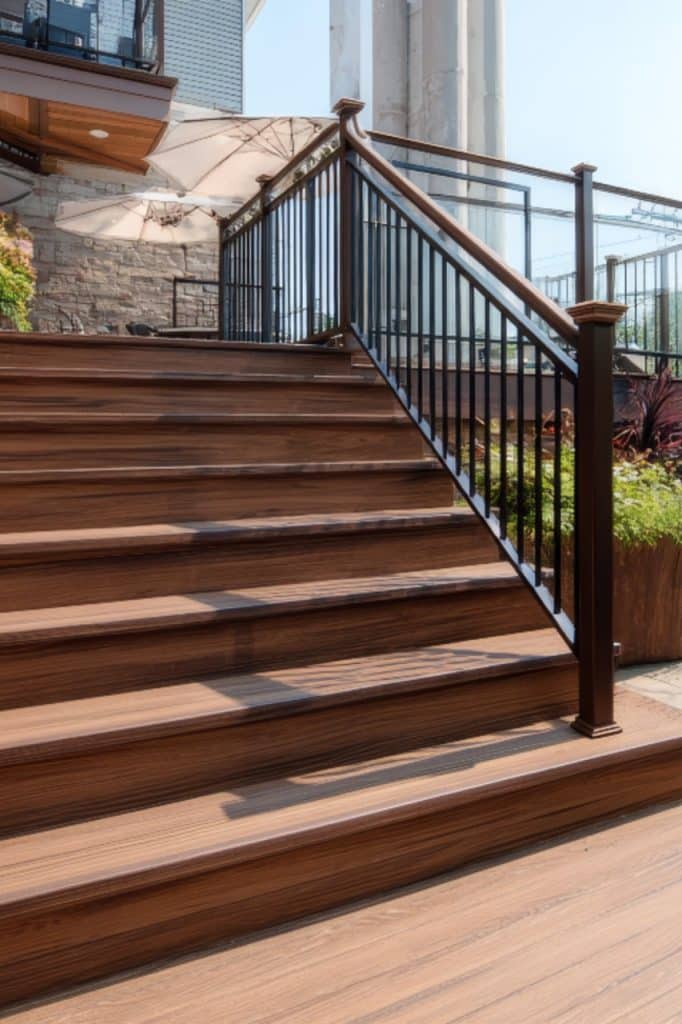
Trex decking is a popular composite material made from a blend of recycled wood fibers and plastic. It’s designed to be an eco-friendly alternative to traditional wood, as it repurposes materials that would otherwise be discarded. Trex is resistant to rot and insects, making it a solid choice for homeowners who want something more durable than wood.
However, despite its advantages, Trex deck construction does require a decent level of maintenance. Over time, the composite material can begin to show signs of wear, like fading and staining.
Regular cleaning can help with this, but you may still find yourself needing to refinish the deck occasionally. Additionally, while it resists rotting and insect damage, it still requires a bit of upkeep to keep it looking its best.
From a cost perspective, Trex deck construction falls somewhere in the middle of the price spectrum.
Pros of Trex Decking
Resistant to Rot and Insects
Unlike wood, Trex is generally resistant to issues like termites or moisture damage. This makes it a great option for humid or wet environments, as it won’t warp, crack, or decay. However, Trex can still be susceptible to mold and mildew in damp conditions, requiring occasional cleaning to maintain its appearance.
Regular upkeep can help mitigate these issues, keeping your deck looking its best for years.
Eco-friendly (Made from Recycled Materials)
Trex is made from recycled materials like wood fibers and plastic, helping reduce waste and preserve forests.
While this makes it a more eco-friendly option than wood, the plastic content raises concerns about long-term environmental impact, as plastic is a non-renewable resource and may not be as sustainable as other materials. However, using recycled materials in production helps offset some of the environmental concerns, contributing to a greener product overall.
Mid-range Cost
Trex is more affordable than PVC but still pricier than wood. Its durability and low maintenance can save money in the long run, but the initial investment may be out of reach for some homeowners compared to untreated wood. It offers a balance between cost and longevity but may still be seen as expensive for certain budgets.
Despite this, the long-term savings on repairs and maintenance can make it a cost-effective option over time.
- General costs of Trex decking: $45-$70 per square foot of deck installation.
Good Performance if Maintained Properly
Trex offers long-term performance, resisting rot, splitting, and splintering when properly maintained. However, it requires occasional cleaning and refinishing to prevent fading and mold buildup. While it lasts longer than wood, it still requires some effort to keep it in good condition, unlike PVC decking, which needs virtually no upkeep.
With proper care, however, Trex can provide years of reliable use and maintain its aesthetic appeal.
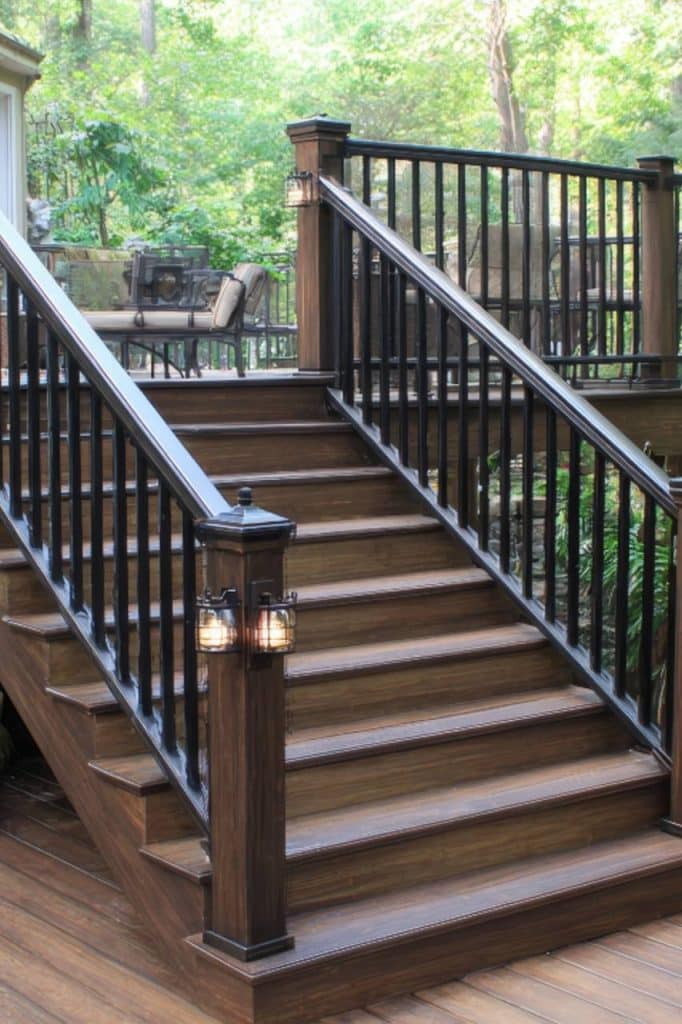
Cons of Trex Composite Decking
Requires Cleaning and Occasional Refinishing
While Trex decking is low-maintenance compared to wood, it still requires regular cleaning to prevent dirt and debris buildup. Over time, composite decking may need occasional refinishing to maintain its appearance, especially in high-traffic areas.
However, the effort is minimal compared to the intensive upkeep required for wood decking. With simple maintenance, you can keep your Trex deck looking fresh and vibrant, making sure that the time spent on upkeep is far less than that of more traditional materials.
Prone to Fading and Staining
One drawback of Trex decking is that, over time, it can be susceptible to fading, especially with prolonged exposure to sunlight. It can also stain if spills aren’t promptly cleaned, particularly from wine or food.
The fading and staining that occur with Trex are much less severe than what you might experience with wood deck construction, which can require frequent refinishing. Regular cleaning and applying a composite-friendly cleaner can minimize these issues, making sure that your deck stays appealing for many years to come.
Still Susceptible to Mold and Mildew in Damp Environments
While Trex decking resists rot and insect damage, it can still be susceptible to mold and mildew growth in damp environments, particularly if not maintained properly. This issue can be easily avoided with regular cleaning and care.
Using a gentle brush and a composite-safe cleaner will prevent mold buildup and keep your deck looking its best. With a bit of attention, Trex decking can continue to provide excellent performance, even in humid or wet conditions.
Wood Decking Overview
Wood decking is the classic choice that many homeowners gravitate toward for its natural beauty and traditional look. Cedar and redwood are particularly popular options due to their rich color and distinctive grain patterns. Wood provides that warm, natural aesthetic that composite or PVC boards sometimes lack.
While the initial cost of pressure-treated wood decking is typically lower than composite or PVC decking, the trade-off is in the maintenance. Wood deck boards require a great deal of upkeep to maintain their appearance and performance. This includes regular cleaning, sanding, sealing, and staining.
Without proper care, wood decks are susceptible to rot, cracking, and warping, especially in environments with high moisture levels, like the Pacific Northwest. Wood decks also pose the risk of splinters, which can be uncomfortable and unsafe for bare feet. Over time, they may also start to show signs of wear such as fading, splintering, and a dull appearance.

Pros of Wood Decking
Classic, Natural Appearance
Wood decking provides a timeless and natural look with unique grain patterns and rich textures, offering warmth and charm that’s hard to match. However, maintaining its beauty requires frequent attention, as wood can fade, warp, and crack over time, especially with exposure to the elements.
Lower Initial Cost
The lower initial cost of wood decking is appealing for homeowners on a budget. But this affordability comes at a cost: wood requires ongoing maintenance, including staining, sealing, and repairs, which can add up over the long term.
- General costs of wood decking: $30-$60 per square foot of deck installation.
Available in a Variety of Wood Types
Wood decking offers a range of options like cedar, redwood, and pine, allowing for customization in appearance and durability. While the variety is beneficial, each type comes with its own challenges — wood like pine is more affordable but less durable, and even the pricier cedar and redwood require significant upkeep.
Easily Customized with Stain and Sealant Options
Wood decks can be customized through staining and sealing, letting homeowners achieve their desired look.
However, this customization is time-consuming and needs to be repeated regularly to prevent damage from moisture, UV rays, and wear, making wood decking a higher-maintenance option in the long run.
Cons of Wood Decking
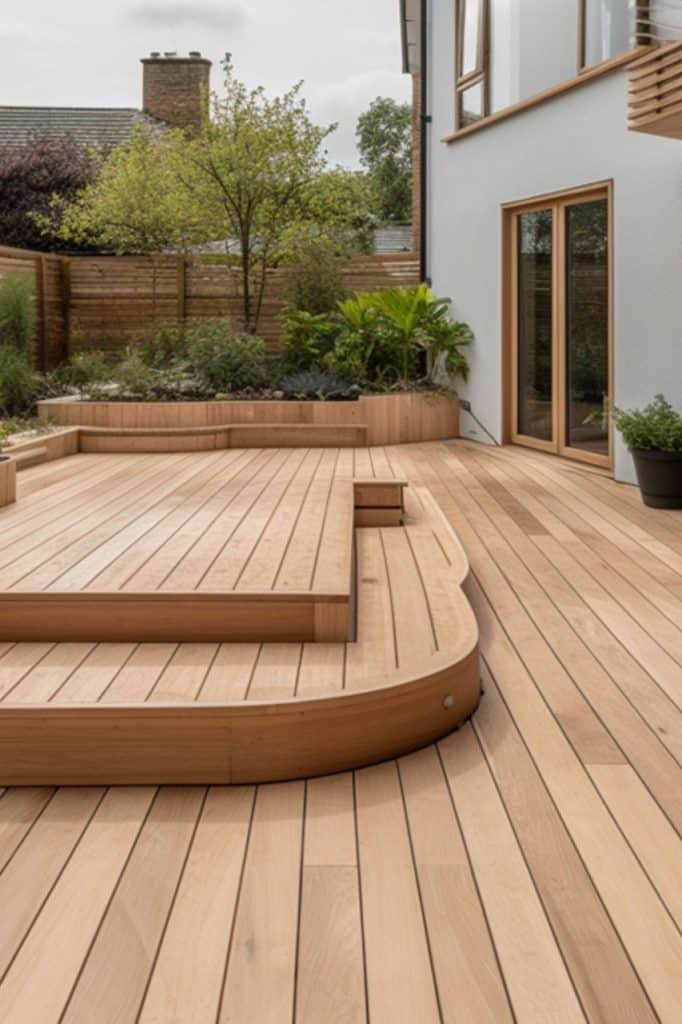
Requires Extensive Maintenance
Wood decking requires regular maintenance, including cleaning, sealing, and staining, to keep it looking good and performing well. Over time, without this upkeep, wood can deteriorate quickly, leading to potential damage from weather and pests.
This ongoing effort can become time-consuming and costly, as homeowners need to repeat these tasks every few years to maintain the deck’s integrity and appearance.
Susceptible to Rot, Cracking, Warping, and Splinters
Wood is naturally susceptible to damage from moisture, insects, and weather, making it prone to rot, cracking, and warping over time. Even with regular maintenance, wood decks are at risk of developing splinters, which can be dangerous for bare feet.
These issues not only affect the deck’s appearance but can also compromise its safety, requiring costly repairs or even early replacement.
Shorter Lifespan Compared to Composite and PVC Decking
Compared to composite or PVC decking, wood has a significantly shorter lifespan, often requiring repairs or replacement after just 10 to 15 years. Wood is more prone to damage from the elements, which accelerates its wear and tear. While it may be a more affordable option initially, the need for repairs or replacement can make wood a less cost-effective solution.
Prone to Fading and Weather Damage Over Time
Wood decking is susceptible to fading due to prolonged exposure to sunlight, as well as weather-related damage like water stains and discoloration. Even with protective sealants, the wood can lose its vibrant color over time and may require refinishing every few years to restore its appearance.
This ongoing need for care can detract from the low-maintenance appeal of wood decking.
Why PVC Decking Is a Smarter Long-Term Choice
While Trex and wood decking are both good choices, there’s another option that is quickly becoming the preferred material for homeowners: PVC decking. Unlike composite decking, which contains a blend of organic and synthetic materials, PVC decking is made entirely from synthetic plastic.
This composition gives it significant advantages over both Trex and wood. PVC decking is impervious to moisture, meaning it won’t absorb water or succumb to rot and mold like wood or composite options. Additionally, its fade and stain resistance guarantees it will maintain its vibrant appearance for years without the need for frequent maintenance or refinishing.

Key Benefits of PVC Decking
No Rot or Insect Damage
Since PVC decking is entirely synthetic, it has no organic materials that can rot or be eaten by insects. This makes it an incredibly durable material for homeowners who want long-lasting performance.
PVC decking won’t degrade from moisture or infestation, helping it to retain its strength and structural integrity for many years. This reliability reduces the need for costly repairs or replacements typically associated with wood or composite materials.
Superior Fade and Stain Resistance
PVC decking is designed to resist fading and staining, even in harsh weather conditions. Unlike Trex, which can fade over time, PVC maintains its color and looks fresh for much longer. Its protective surface keeps it from being easily marred by spills or dirt, making it especially suitable for families with pets or young children.
The result is a deck that looks new for many years without the need for frequent cleaning or refinishing.
Minimal Maintenance
One of the biggest advantages of PVC decking is its low-maintenance nature. With PVC, you won’t need to sand, stain, or seal your deck regularly. In fact, a simple rinse with a hose is typically all that’s needed to keep your deck looking great year-round.
This ease of upkeep saves homeowners time and money on labor and materials, allowing them to enjoy their outdoor space without the hassle of near-constant maintenance.
Longer Lifespan
PVC boards have a longer lifespan compared to wood or composite materials. They’re resistant to moisture and will not warp, crack, or split like traditional wood decking. In addition to being virtually maintenance-free, the durability of PVC means it can withstand the elements and high-traffic areas, making it a cost-effective option in the long run.
Homeowners can enjoy a pristine deck for decades without worrying about frequent repairs or replacement.
Ideal for Pacific Northwest Climate
PVC decking is perfect for the Tri-Cities area, where the climate can be wet and damp. Unlike wood decking, which can absorb moisture and deteriorate over time, PVC is moisture-resistant, making it an ideal choice for high-moisture environments. Its water-resistant properties guarantee it won’t buckle under pressure, and it will stay strong and beautiful even in the region’s wettest months.
This makes PVC a smart investment for homeowners seeking a reliable deck material that thrives in all weather conditions.
Attractive and Modern Appearance

PVC boards come in a range of colors and finishes, many of which mimic the look of wood without the downsides. Whether you prefer a sleek, contemporary design or something more classic, there’s a PVC option that will suit your style.
These boards are available in various textures that replicate the natural grain of wood, offering the visual appeal of traditional decking without the maintenance concerns. Additionally, the color options are versatile, allowing homeowners to choose from a wide variety of tones to complement their home’s exterior and landscaping.
Simpson Decks and Construction: A PVC Decking Focus
PVC decking has become increasingly popular due to its exceptional durability, low-maintenance requirements, and modern aesthetic. Unlike wood or composite options, PVC decking is fully synthetic, which means it doesn’t suffer from issues like rot, warping, or insect damage.
At Simpson Decks and Construction, we specialize in PVC decking, offering custom design options and expert installation. Choosing a provider who understands the nuances of PVC decking will help you create an outdoor space that stands the test of time with minimal maintenance.
Want a new deck that looks great for years without the hassle? Contact Simpson Decks and Construction to learn more about the long-lasting benefits of PVC decking.