
The Tri-Cities gets roughly 300 sunny days each year. That sounds like a dream for outdoor living, and it is. But those same conditions that make your patio cover worth having are also what put it through the most stress. Summer temperatures push well past 100 degrees. Columbia Basin winds pick up hard in spring and fall. Winters bring freezing nights and the occasional snow load that most homeowners do not plan for when they first install a cover.
If you invested in a patio cover, pergola, or covered outdoor structure, you made a real financial commitment to your home. The difference between a cover that looks great and performs well for decades and one that needs early replacement often comes down to a handful of maintenance habits matched to your specific material and the specific conditions here in Kennewick, Richland, and Pasco.
This article gives you those habits, broken down by material and season.
In this post, you’ll learn:
- Why Tri-Cities weather is harder on patio covers than most homeowners expect
- What maintenance your specific cover material actually needs
- A seasonal inspection checklist to catch small problems before they become expensive ones
- When it is time to call a professional instead of handling it yourself
Why Tri-Cities Weather Is Harder on Patio Covers Than Most Homeowners Expect

The Pacific Northwest gets a reputation for rain, but the Tri-Cities is a different story. Here, the challenge is intensity: intense UV exposure, thermal stress, wind, and freeze/thaw cycles that cycle through the same structure year after year.
UV rays and sustained heat cause surface fading, thermal expansion, and gradual surface degradation on almost every cover material. Wood dries and cracks. Aluminum finishes dull. Even composite materials can show color shift over time without basic care.
Wind is the other factor people underestimate. Columbia Basin gusts put real stress on attachment points, the hardware where your cover connects to your home or posts. Loose fasteners that go unchecked do not just rattle. They allow movement that, over time, compromises the structural integrity of the whole cover.
Winter adds a different kind of wear. Freezing temperatures drive moisture into any small crack or gap, and when that moisture expands, it widens the crack. Fasteners corrode. Surfaces that were not properly sealed before the cold arrived pay for it in spring.
Then there is the dust. Eastern Washington’s dry, gritty air coats outdoor surfaces constantly. That grit acts like fine sandpaper on finishes, especially when heat bakes it in. Regular cleaning is not just cosmetic. It is part of protecting the surface itself.
Material-Specific Protection: What Your Cover Needs Based on What It’s Made Of
Patio cover maintenance is not one-size-fits-all. What works for aluminum can damage composite. What wood needs, aluminum does not. Start here.
Wood Covers
Wood is the highest-maintenance option in this climate. In the Tri-Cities, sun exposure and seasonal dust accelerate finish degradation, which means wood covers need sealing or staining every one to two years, not the three to four years you might get away with in a milder region. Use a high-quality, flexible sealant rated for cold and variable climates, with mold and algae resistance built in. Apply it evenly with a brush, roller, or sprayer, and allow 24 to 48 hours of dry time before putting the cover back into use. Skipping a cycle does not just affect appearance. It opens the wood to moisture intrusion and accelerates structural wear.
Aluminum Covers
Aluminum is genuinely low maintenance, but low maintenance is not zero maintenance. Clean it with mild soap and water to remove dust and grime buildup. More importantly, inspect the attachment hardware seasonally. Aluminum handles heat and wind loads well, but the fasteners and brackets that anchor it to your home are still subject to corrosion and loosening over time. Catching a loose bracket in fall costs almost nothing to fix. Catching it after a winter of movement is a different conversation.
Composite and Engineered Covers
Composite covers are built for outdoor structure durability, but they have specific care requirements. Clean with a non-corrosive cleaner rated safe for plastics and a soft brush, then rinse thoroughly. Keep drainage gaps clear so water does not pool. Do not sand composite surfaces, and avoid harsh chemicals that can void the manufacturer’s warranty or damage the finish. Do not pressure wash. High-pressure water can force moisture into seams and damage the surface texture in ways that are not always visible right away.
Seasonal Inspection Checklist

Spring: Before outdoor season starts, do a full walkthrough. Check every fastener, attachment point, and roof connection. Look for signs of winter moisture intrusion: warping, surface cracking, or soft spots in wood. Clear any debris from drainage gaps. This is the inspection that sets up the rest of your year.
Summer: After major wind events, check for any movement or damage at attachment points. On wood covers, watch for UV fading or surface bubbling, which signals the sealant is breaking down. Keep surfaces clean. Heat-baked grit is abrasive, and a quick rinse after dusty stretches protects your finish.
Fall: Clear leaves and debris before they trap moisture against the surface through winter. Inspect and tighten any hardware that has worked loose. If you have a wood cover, apply sealant now, before freezing temperatures arrive. Waiting until spring means your wood goes through an entire winter unprotected.
Winter: After snow events, clear accumulation gently to reduce load stress on the structure. Use a soft broom or plastic tool. Metal shovels and scrapers can scratch or gouge surfaces and damage finishes that took time and money to apply.
Protecting What’s Under the Cover
Your patio cover protects your outdoor space, but what sits on the deck beneath it also affects the cover’s long-term performance. Outdoor furniture, grills, and planters left in place through winter can trap moisture against the deck surface, which works its way into the structural base of the cover over time.
When possible, store furniture and décor indoors during winter. If indoor storage is not an option, use breathable, weather-resistant covers. The key word is breathable. Covers that trap condensation against the deck surface create the moisture conditions you are trying to avoid. Keep the deck surface clear of standing water and debris year-round.
When to Call a Professional
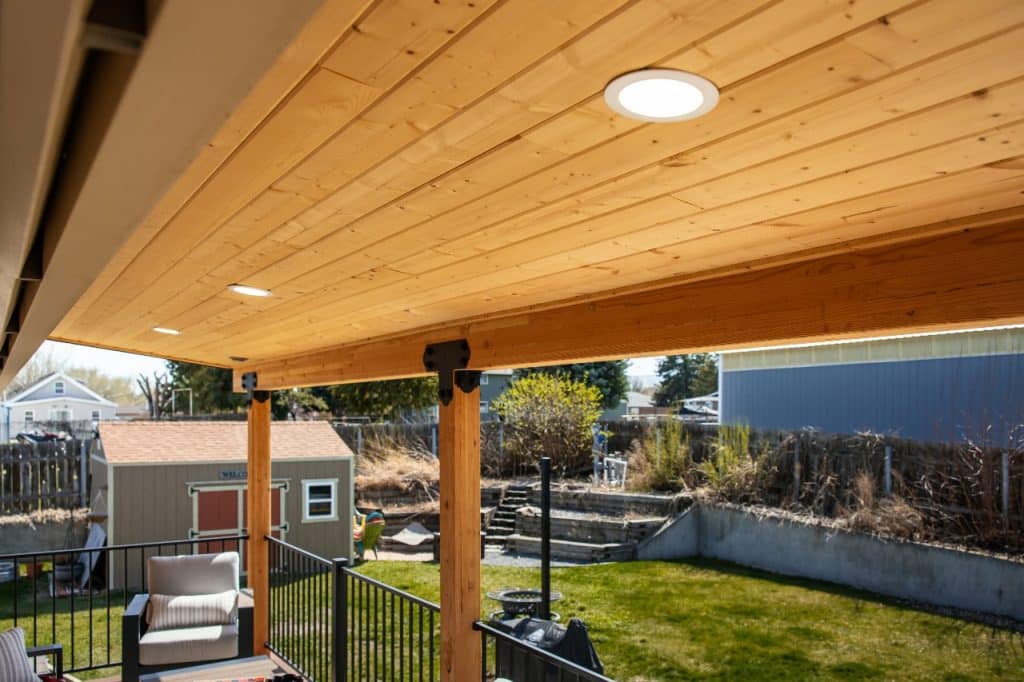
Some things are worth handling yourself. Others are not. If you notice loose or shifting attachment points where the cover connects to your home, visible structural movement, persistent water intrusion after rain or snow, or fastener corrosion that has spread across multiple points, those are signs that go beyond routine patio cover maintenance.
Structural repairs and any work that alters how a cover attaches to your home typically require a permit and a contractor who understands local building codes and load requirements for the Tri-Cities. Getting that work done correctly the first time protects both your investment and your home.
At Simpson Decks and Construction, we offer consultations for homeowners who want a professional assessment of their structure’s condition. If something looks off and you are not sure whether it is a DIY fix or a structural issue, we will give you a straight answer.
Get a Professional Eye on Your Patio Cover
The Tri-Cities climate is specific, and the right patio cover weather protection habits matched to your material make a real difference in how long your structure performs. Wood needs regular sealing. Aluminum needs hardware checks. Composite needs the right cleaner and clear drainage. All of them benefit from a seasonal inspection that catches small problems before they become costly repairs.
If you want a professional to assess your patio cover’s current condition, or if you are considering an upgrade to a lower-maintenance material, schedule a consultation with Simpson Decks and Construction. We know Tri-Cities outdoor structures, and we will tell you exactly what your cover needs.