
There are more patio cover ideas out there than you can imagine, but matching one to your home’s exterior takes a degree of creative selection. Done well, it can transform your backyard into a true outdoor living space.
According to the National Association of Home Builders (NAHB), outdoor living spaces remain one of the most desired features among homebuyers, making thoughtful exterior design choices even more important. A mismatch, however, is difficult to ignore and difficult to undo as well.
Here’s how to make sure you get it right the first time.
Start by Reading Your Home’s Design Language

Before you begin looking at patio covers, spend some time studying your home’s exterior the way a designer would, which is to say carefully and with an open mind. Every home communicates a visual language all its own, through shapes, materials, rooflines, and general details. You want your patio cover to speak the same language.
Ask yourself:
- What is the dominant roof pitch: steep and gabled, low and flat, or something in between?
- What materials define the exterior: brick, wood siding, stucco, or fiber cement?
- What colors are present in the trim, fascia, shutters, and front door?
- Does the home have a formal, symmetrical feel, or is it more casual and organic?
- Does your property have a concrete patio or driveways?
The answers to these questions will become your design brief. A well-matched patio cover echoes these elements instead of introducing something entirely new, while leaving room for some creative inspiration.
Patio Cover Ideas for Every Architectural Style
Different home styles call for different approaches. Here’s how to align your patio cover with your home’s existing design.
Traditional and Colonial Homes
With these, you want to lean into formality. Gabled roofs, symmetrical layouts, and formal columns complement the structured, classic lines of traditional architecture. Wood or painted composite materials in crisp white or neutral tones work beautifully here.
Modern and Contemporary Homes
Clean lines and minimalism are the guiding principles for modern and contemporary homes. Flat or shed-style patio covers with slim aluminum framing and an uncluttered profile reinforce the modern aesthetic without clashing with it. Neutral or bold accent colors will anchor the outdoor space.
Craftsman Homes
The craftsman style celebrates natural materials and handcrafted detail. Exposed wood beams, tapered columns, and natural stain finishes are classic patio cover ideas for this style. A pergola-style cover with heavy timber elements feels right at home on a craftsman porch or deck.
Ranch Homes
Low-profile and horizontal are the watchwords. A wide, shallow-pitched patio cover that parallels the long, grounded lines of a ranch home maintains cohesion throughout. Avoid anything too tall or ornate; it will fight the home’s proportions.
Mediterranean Homes
Arched openings, stucco finishes, and clay tile details define this style. A patio cover with arched or curved elements, warm earthy tones, and tile roofing accents creates a seamless connection between the home and the outdoor living space.
Creating the Right Materials
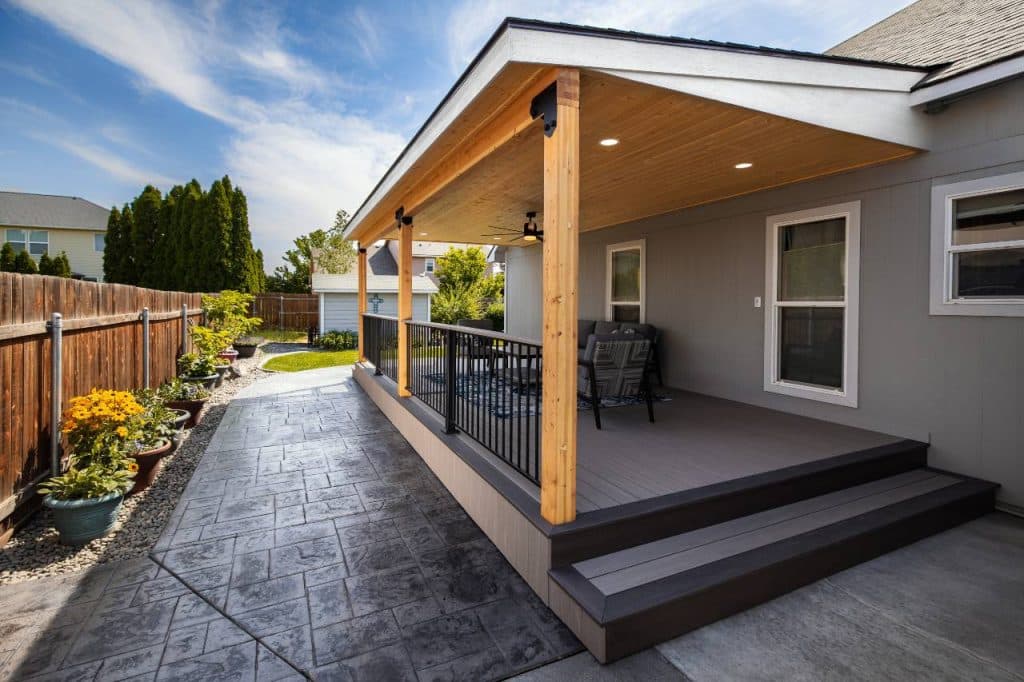
Material selection is one of the most impactful choices you can make in patio cover installation. The best materials will pull double-duty here, performing well in the climate and reinforcing the visual connection with your home.
Wood
Wood is ideal for traditional, craftsman, and Mediterranean homes. It’s warm, customizable, and can be stained or painted to match the existing trim. It does require a bit more maintenance, however, but it will reward your efforts with unmatched character.
Aluminum
Aluminum is the go-to for modern homes and low-maintenance lifestyles. It’s durable, weather-resistant, and available in powder-coated finishes that hold up year-round without fading or warping.
Composite Materials
This option covers multiple styles, mimicking the look of wood without all the upkeep. It also holds paint or stains very well, making it the practical choice when aesthetics and durability top the list.
When in doubt, coordinate with your siding material or trim colors to create a cohesive appearance.
Color Coordination That Actually Works
Color is where many patio cover styles stumble. The goal isn’t necessarily to find an exact match, but to coordinate.
- Match your trim color for a classic, integrated look that ties the cover to your home’s palette.
- Use a contemporary neutral if you want the cover to blend into the background and let the outdoor area take center stage.
- Consider stain versus paint for wood structures. Stain enhances while paint offers crisp lines and better color.
Pull colors from what’s already on your home (trim, fascia, window frames, shutters, etc.) and operate within that palette instead of introducing new ones.
Getting the Proportions and Roofline Right
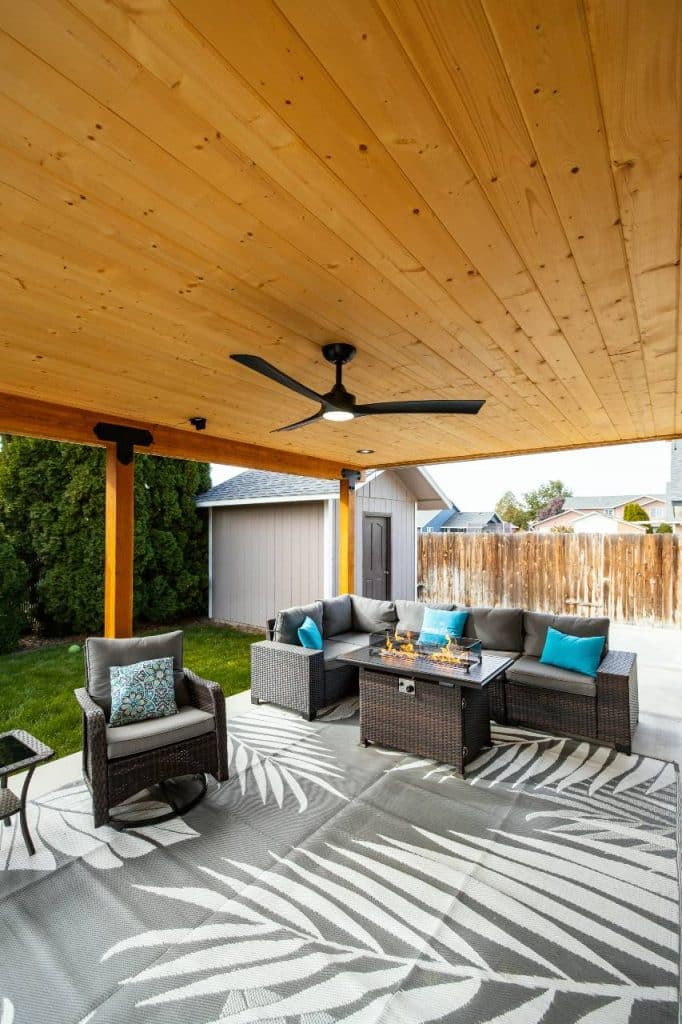
Even a beautifully detailed patio cover will look wrong if the size is off or it sits awkwardly against the house. Proportion and roofline relationships are incredibly important.
Here are a few key principles to follow:
- Match the roof pitch when attaching to a gabled or sloped roofline for the cleanest look.
- Scale to the home, since a cover that’s too small looks like an accessory and one that’s too large is overwhelming.
- Plan attachment points carefully so the transition from roof to cover looks clean and natural.
- Maintain visual flow from the home’s roofline through the patio cover and into the backyard.
It’s not just a matter of aesthetics here either. Getting the proportions right will offer protection from the elements and help push water away during heavy rains.
Coordinating with Your Existing Outdoor Features
Your patio cover won’t exist in isolation, because it shares the outdoor living space with your deck or paver patio, fencing, landscaping, seating area, outdoor kitchen, and lighting, all of which influence the cohesion.
Repeat materials wherever possible. If your deck uses a warm wood tone, carry that into the cover’s framing or ceiling panels. If your fencing is painted white, a white-trimmed outdoor fabric is the right solution. Even outdoor lighting fixtures chosen to accommodate the cover’s style will pull the space together.
Design Mistakes to Avoid
There are a few common missteps in patio cover installation that you want to avoid, especially if cohesion is only achievable through very careful selections.
Mismatching Styles
A rustic wood pergola on a sleek modern home, or a flat aluminum cover on a traditional colonial, creates a visual dissonance that’s difficult to overlook, especially in the sun.
Going Too Big or Too Small
Disproportionate covers disrupt the balance of the entire exterior, and it goes well beyond just the transition from the house to the canopy. It can throw off the landscaping, lighting, patio, and more.
Introducing Unrelated Colors
A cover in a color that has no relationship with the home’s existing palette will ultimately look like an addition that sticks out, instead of the extension look that you want.
Ignoring Roofline Relationships

A cover that cuts awkwardly across an existing roofline or gable creates an unfinished, unbalanced, haphazard aesthetic.
Design It Right with Simpson Decks and Construction
Are you ready to enhance your outdoor living space with an outdoor patio cover that looks like it was a part of your home from the very beginning? Simpson Decks and Construction’s design experts specialize in patio cover ideas that complement your home’s unique architectural style and exterior.
Every detail is considered, every proportion deliberate, and every material chosen with your home’s design language in mind. Contact Simpson Decks and Construction today for a free design consultation. Discover why homeowners trust our expertise in creating cohesive, beautiful outdoor spaces that enhance the function and curb appeal of your home.