
You can spot a disconnected deck from the street. The boards are a different color than the siding. The railing style has nothing to do with the trim on the windows. The whole structure looks like it was ordered from a catalog and attached to the back of the house as an afterthought.
A well-matched custom deck design does the opposite. It looks like it was always there, like the builder planned for it from day one. That difference shows up in curb appeal, in how much you actually use the space, and in the long-term value it adds to your home. According to outdoor living trends tracked by the Northeastern Retail Lumber Association, homeowners are increasingly treating decks as true extensions of their living space, not just a platform with a grill on it.
This guide walks Tri-Cities homeowners through how to read your home’s architectural style, choose materials that hold up to local weather, get the proportions right, and avoid the mistakes that make a deck look like it doesn’t belong.
In this post, you’ll learn:
- How to identify your home’s architectural style and use it to drive your deck design ideas
- Which materials perform best in Tri-Cities conditions and why
- How to scale and detail a deck so it looks cohesive with your home
- What common design mistakes cost homeowners money and curb appeal
How to Read Your Home’s Architectural Style
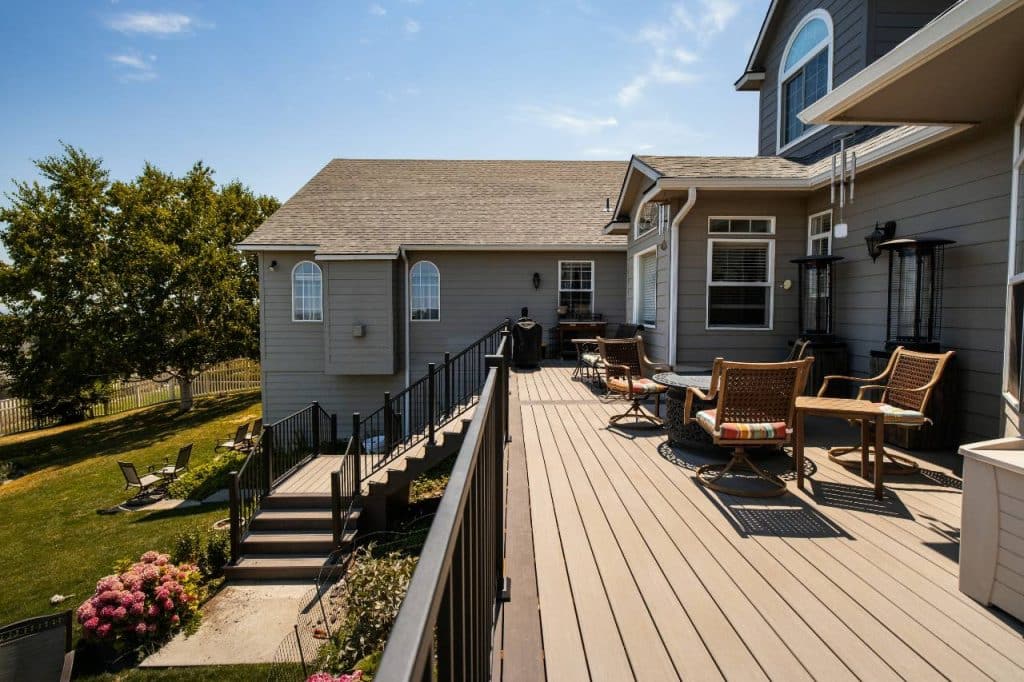
Before you think about board color or railing style, look at your house. Really look at it.
Notice the roof pitch. Is it steep and angular, or low and flat? Look at the siding material and the trim profiles around the windows and doors. Is the facade symmetrical, with matching windows on either side of the front door, or does it have an asymmetrical, layered look? These details are your home’s design language, and your deck should speak the same one.
Common home styles in the Tri-Cities include Ranch, Craftsman, Traditional/Colonial, Modern/Contemporary, and Mediterranean. Each has a distinct visual vocabulary. A Ranch home has low, horizontal lines and a wide footprint. A Craftsman home leans on natural textures, warm tones, and handcrafted-looking details. Traditional and Colonial homes favor symmetry and classic proportions. Modern homes strip everything back to clean geometry. Mediterranean homes use earth tones, curved forms, and materials that feel warm and substantial.
Your deck design ideas should start here, not with a Pinterest board.
Matching Deck Style to Home Architecture
Once you know your home’s style, you can make deliberate choices about layout, railing, and detail.
Ranch homes call for low-profile, wide platforms that extend the home’s horizontal footprint. Avoid multi-level designs that add vertical mass to a house built to hug the ground. Keep the railing simple and the board direction consistent with the home’s lines.
Craftsman homes pair well with warm-toned decking, built-in benches or planters, and railing details that echo the home’s handcrafted character. The goal is a deck that feels like it grew out of the house rather than being attached to it.
Traditional and Colonial homes benefit from symmetrical layouts and classic railing patterns. Neutral or wood-tone color palettes keep the deck from competing with the home’s formal proportions.
Modern and Contemporary homes call for restraint. Clean lines, slim-profile railings, and minimal ornamentation. Anything fussy will fight the architecture.
Mediterranean homes work well with earth tones, tiered or curved layouts, and accents that reference stone or tile. The warmth of the materials matters as much as the shape.
In every case, railing choice, board direction, and overall layout should reinforce the home’s existing design, not contradict it. As Simpson Decks notes, a well-designed deck balances beauty, durability, and how you plan to use the space.
Choosing Materials That Complement Your Home
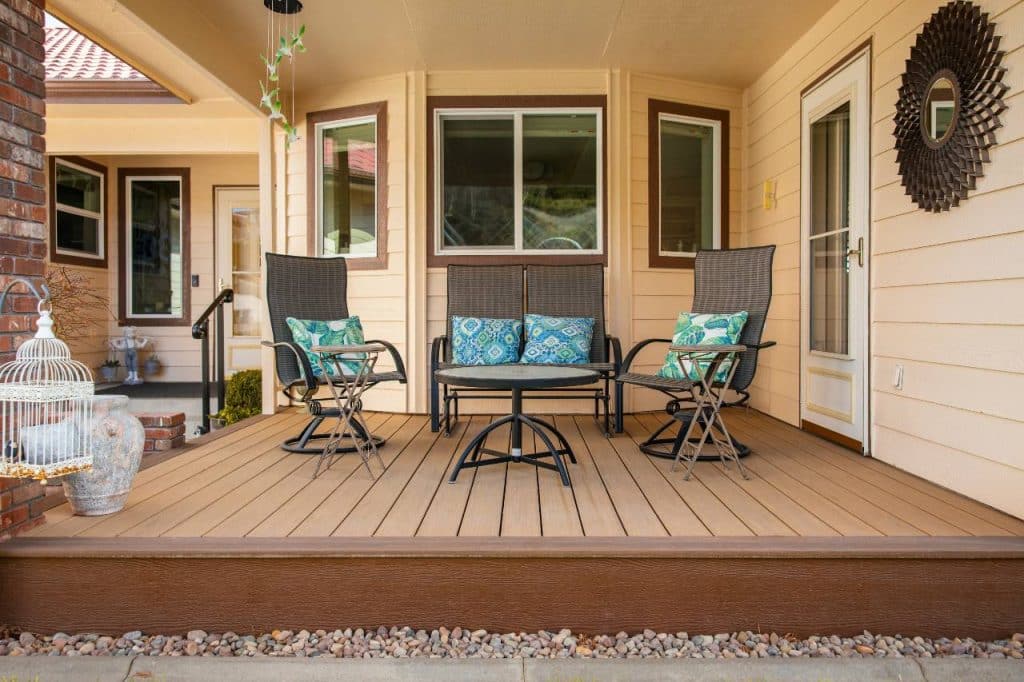
Material choice affects how the deck looks, how long it lasts, and how much time you spend maintaining it. In the Tri-Cities, that last point matters more than most homeowners expect.
Wood offers timeless appeal and works well with Craftsman, Traditional, and Mediterranean styles. The trade-off is real: wood requires staining or sealing every two to four years in Tri-Cities sun and dust, and it will eventually rot, warp, or splinter if that maintenance slips.
Composite blends wood fibers and recycled plastic to give you a wood-like look with less upkeep than natural wood. It holds color longer and resists moisture better than wood, though it does not match PVC for long-term durability.
PVC is what Simpson Decks specializes in, and there is a straightforward reason for that. PVC resists rotting, warping, splintering, moisture, insects, fading, and scratching. It requires no staining, no sealing, and no sanding. Mainly occasional cleaning. It is built to handle hot summers, cold winter conditions, and the kind of sun exposure the Tri-Cities delivers most of the year. For homeowners who want their outdoor space to look great without giving up weekends to maintenance, PVC is the clear choice for this climate.
Material choice also affects hardware, labor, and long-term costs. A lower upfront price on wood can quietly become the more expensive option once you factor in years of maintenance.
Getting the Proportions and Details Right
A deck that is too large overwhelms the house. One that is too small looks like a landing pad. Scale matters, and it starts with the home’s footprint and the yard’s usable space.
When adding a cover or pergola, match or echo the home’s roof pitch. A flat cover on a steeply pitched roof creates a visual disconnect that is hard to ignore. Repeat trim colors and materials between the deck and the house so the two read as one composition rather than two separate projects.
Attachment points deserve attention too. Where the deck meets the house should look intentional and manage water runoff cleanly. A sloppy transition invites moisture problems and looks unfinished.
Site conditions in the Tri-Cities also shape structural decisions. Soils here range from sandy to clay-heavy. Poor drainage can cause standing water around posts and footings, which shortens deck life. Sloped yards often require grading or additional footings. These are not details to figure out after the project starts.
Common Design Mistakes to Avoid
Most deck regrets trace back to a handful of predictable decisions.
Choosing materials based only on upfront cost is the most common one. Maintenance costs are real, and they add up. Ignoring how the deck connects visually to the roofline and siding produces that bolted-on look. Oversizing or undersizing the deck relative to the home and yard throws off the proportions of the whole property.
Skipping a professional site evaluation for soil, grading, and drainage is a structural risk, not just an aesthetic one. And forgetting about permits and local code requirements can stop a project mid-build or create problems at resale. These are not bureaucratic inconveniences. They are part of building something that lasts.
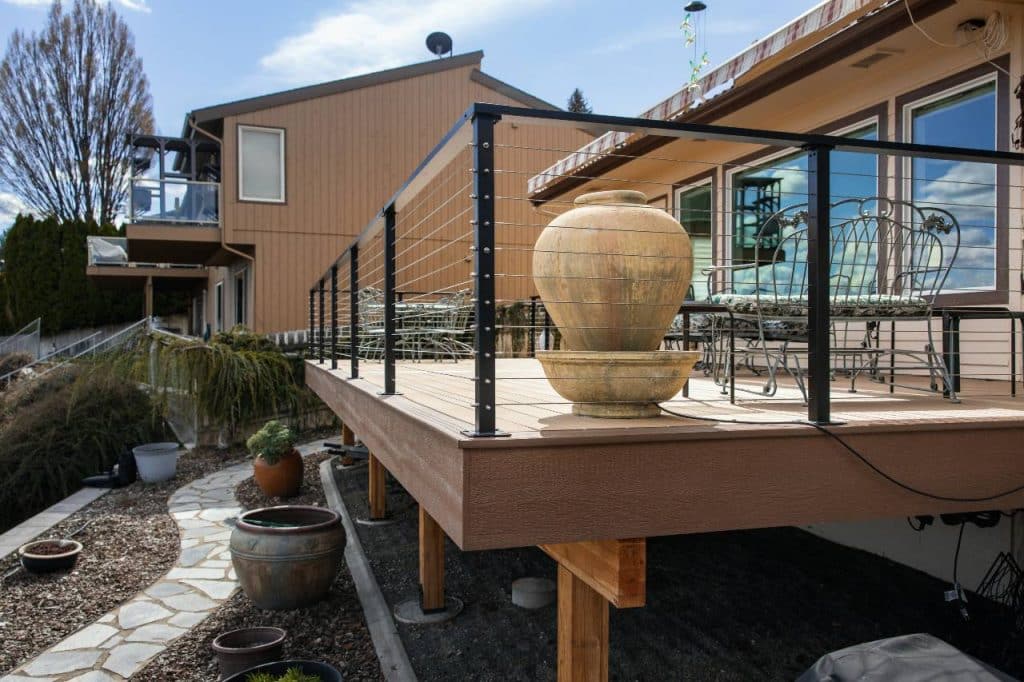
The Value of Professional Custom Deck Design
A design consultation does something a catalog cannot: it accounts for your home’s architecture, your property’s specific conditions, and your budget at the same time.
Simpson Decks and Construction handles all permits and inspections so you do not have to navigate city paperwork on top of everything else. From initial design through final installation, the process is managed for you. A well-designed deck can meaningfully support curb appeal, daily enjoyment, and long-term home value, and getting the design right from the start is what makes that possible.
Simpson is a family-owned, local Tri-Cities company, licensed, bonded, and insured, with hands-on experience building custom deck designs that fit the homes and conditions here. That local knowledge is not something you can import from a national chain.
Ready to See What a Custom Deck Design Looks Like for Your Home?
Schedule a free on-site consultation with Simpson Decks and Construction. We will evaluate your home’s style, your property’s conditions, and your goals, then give you a free estimate with no surprises. Call us at 509-579-0719 or visit our website to get started.